

1·
3 years agoOr I should explain better: most training samples will be cut off at the top, so the network sort of learns to ignore it a bit.
Or I should explain better: most training samples will be cut off at the top, so the network sort of learns to ignore it a bit.
Yes, that’s by design, the networks work on transcripts per input, it does genuinely get cut off eventually, usually it purges an entire older line when the tokens exceed a limit.
I was a curious child, and things spiralled out of control from there…
Ah, that makes sense. Most cloud providers have the full nine yards with online hardware provisioning and imaging I forgot you could still just rent a real machine.
Hmm, wonder if there was some reason they didnt just extract the original certificates from the VPS if it was actually the hosting provider, I mean even with mitigation it should be sitting in a temp folder somewhere, surely they could? Issuing new ones seems like a surefire way to alert the operators, unless they already used Let’s Encrypt of course.
They previously did not use APEX but that seems to have changed recently: https://github.com/GrapheneOS/grapheneos.org/commit/7bf9b2671667828d1553c92bf4f64cc749b74d0b Regardless it will need the verified boot keys it seems so Google can’t update them, likely the devs will take responsibility to update the CAs. No idea if they will restore the user control though.
I feel like this is just describing the future of business processing consultants. Like there’s already a role for this, unless I’m missing something?

Like others have said, practice is key, however I’d like to add that you should not feel too discouraged if it feels like you’re making no progress. You’re probably making more headroom than you realize. At least personally in programming more than anything else I have occasionally only seen results after I came back to a concept I gave up on learning.
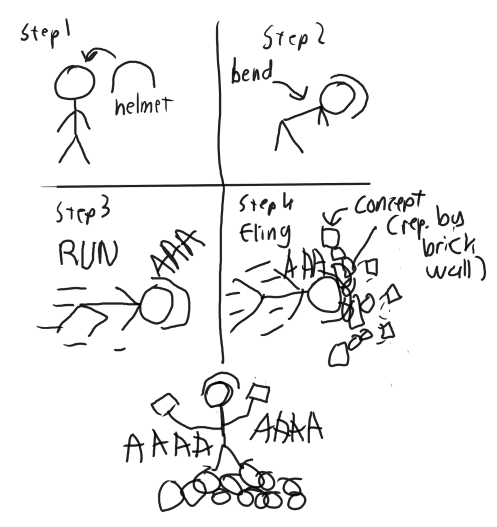
Do be aware of getting stuck in local minimum though. I know it probably feels like bad advice but I figured I’d give it since it helped me personally, so maybe it might help someone else.
Ah, even then it could just be a consequence of training samples usually being chronological(most often the expected resolution for conflicting instructions is “whatever you heard last”, with some exceptions when explicitly stated) so it learns to think that way. I did find the pattern also applies to GPT trained on long articles where you’d expect it not to, so wanted to just explain why that might be.