
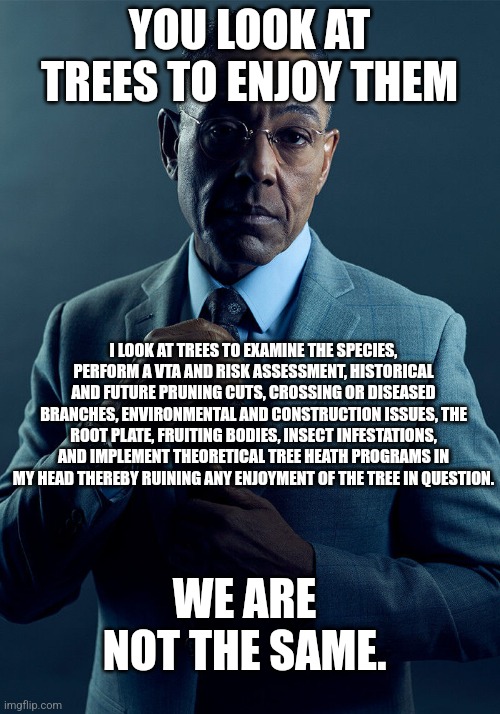
Me be like:


Me be like:

Glassblowing was another big one. Plus framing for stone construction.
Colonialism seems to born out of the need for more wood since it underpinned all energy, trade, and construction. We can see now how fossil fuels are working out for us instead.
There are some good examples of bay side cities being abandoned due to siltation of their bays, some kilometres worth of silt. Massive centres of trade and then nothing due to erosion because of a lack of trees.
If John/Primitive Tech can focus on efficient energy usage then all the better.
You can but sometimes it’s nice to not see it.
You just message it with the community “!community@blah.blah”, I believe.
He also demonstrates how industry was responsible for significant deforestation around their centres. It has also been linked to collapse of civilisations.
A good book to see how critical wood was to people: https://aforestjourney.com/
As their specialised knowledge reaches the edge of the circle, their general knowledge updating should retract.
Everyone has met a PhD that is almost entirely clueless in other areas. Not their fault though, don’t get me wrong.
Edit: The person that downvoted must be Dr. Climate Change Denier. Dr. Covid Denier has joined the fray.

A Pixel (with long security updates) because GrapheneOS is the operating system to use.
It’s limiting but that’s the way it is.
In Australia, there were some news articles stating that if an elderly person can’t explain the scratches (blood, body parts) on their car, you should take them to a Doctor to get their licence revoked. But only if you can force them to go somehow.

The study is open access.
Abstract:
Nano-/microplastics accumulate in aquatic bodies and raise increasing threats to ecosystems and human health. The limitation of existing water cleanup strategies, especially in the context of nano-/microplastics, primarily arises from their complexity (morphological, compositional, and dimensional). Here, highly efficient and bio-based flowthrough capturing materials (bioCap) are reported to remove a broad spectrum of nano-/microplastics from water: polyethylene terephthalate (anionic, irregular shape), polyethylene (net neutral, irregular shape), polystyrene (anionic and cationic, spherical shape), and other anionic and spherical shaped particles (polymethyl methacrylate, polypropylene, and polyvinyl chloride). Highly efficient bioCap systems that adsorb the ubiquitous particles released from beverage bags are demonstrated. As evidence of removal from drinking water, the in vivo biodistribution of nano-/microplastics is profiled, confirming a significant reduction of particle accumulation in main organs. The unique advantage of phenolic-mediated multi-molecular interactions is employed in sustainable, cost-effective, and facile strategies based on wood sawdust support for the removal of challenging nano-/microplastics pollutions.

Oh you, tee hee hee.
Hardly, though. I have an ability to inefficiently find and check websites that are related to Australian environment news and then repost articles to the void.
It’s not much but it’s pointless work.
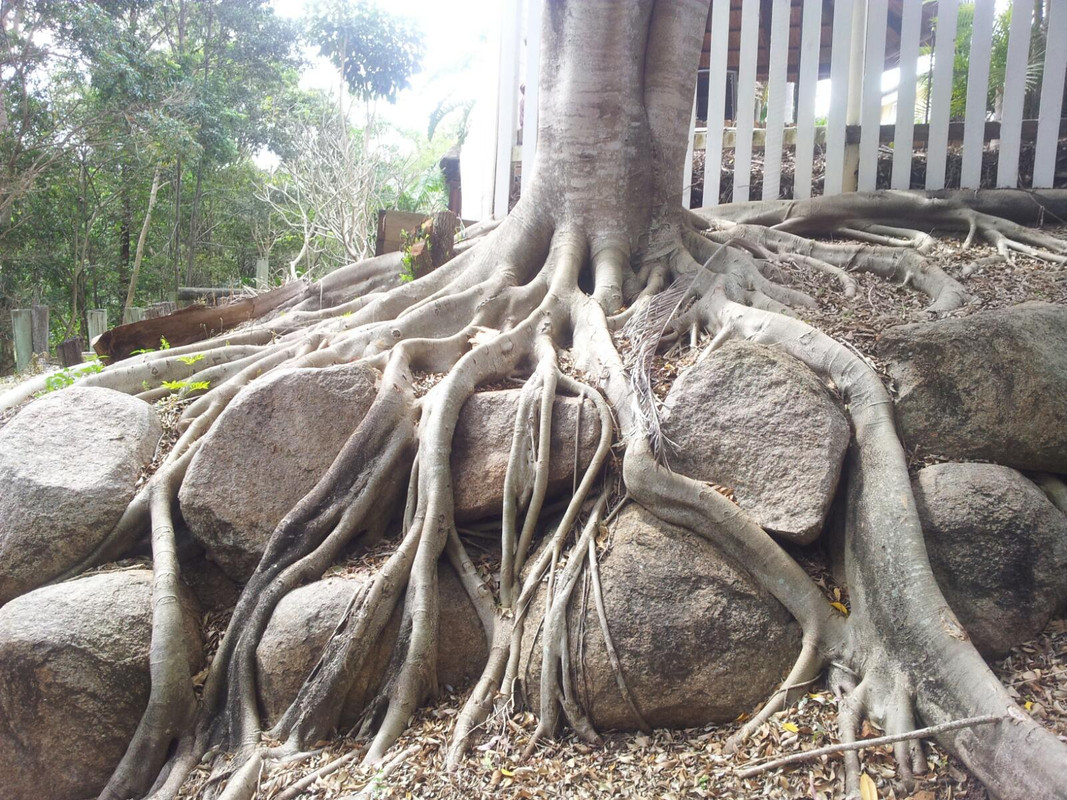
Fascinating picture.
Every tree is precisely where trees don’t normally grow well without some effort.
Perhaps when the landscape designer did the top down view, having trees in the grassed area looked weird.

The dream would be that I could sort them into a feedreader and select articles out but that won’t happen. Nor would I want a bot doing it either.
Unfortunately, no one else posts so for the meantime, I just have to keep going or let it die.
I made myself a thread of interests I add to over time:












I got it during a websearch. Changed VPN server to another city and it went away. Mullvad.